PHOTO
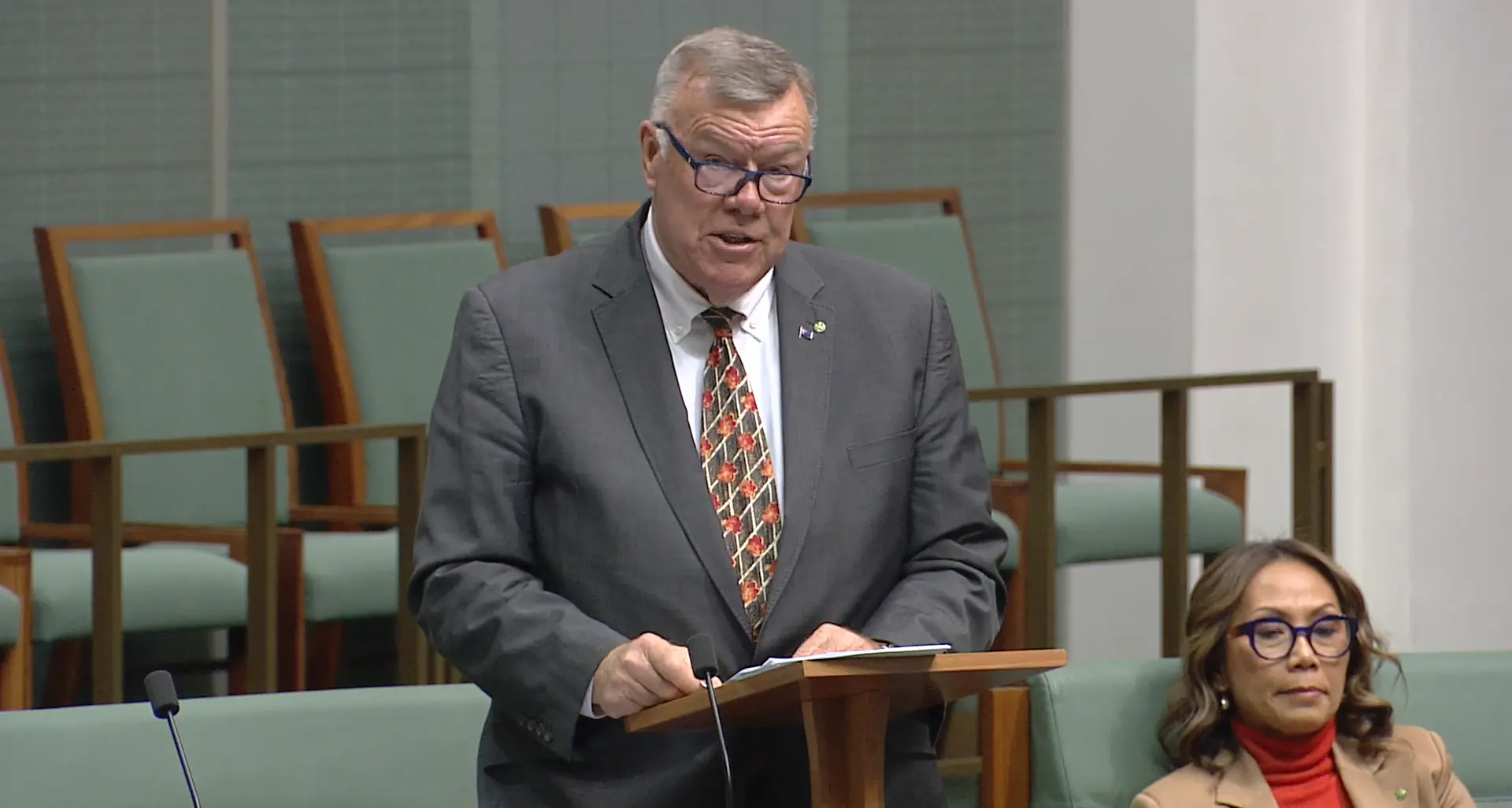
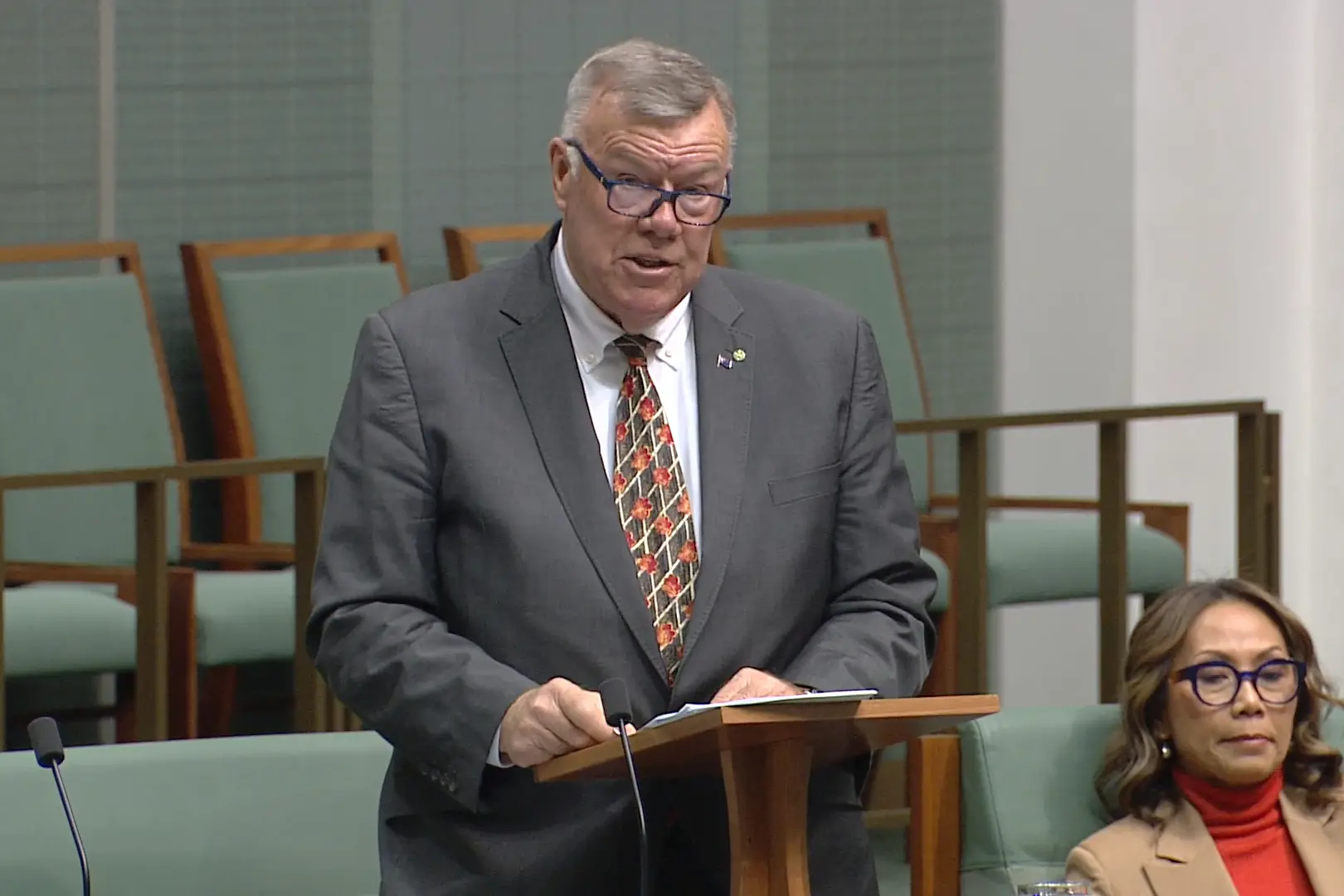
One Nation’s second-ever MP David Farley of Narrandera has used his maiden speech to call for the swift removal of those who “want to bring harm” to Aussies and guard the nation’s “generosity”.
His speech stuck to his roots of farming, family and “productive capital”.
Mr Farley replaced one-time opposition leader Sussan Ley as Member for Farrer following a by-election upset in May.
In his more than 20-minute maiden speech delivered last week, Mr Farley said Australia was “one nation of an extraordinarily fortunate people” and recalled the mixed racial and religious tapestry of his early schooling.
However, while acknowledging Australia had “invited talent from every corner of the world who choose to call this nation home and become contributing Australians”, that privilege must be guarded, Mr Farley said.
“Our national generosity, kindness, and humanity has offered the opportunity of new life to those who have been discriminated and persecuted against,” he said.
“That same generosity and kindness must be guarded and respected.
“As we open our welcoming doors, there are those who arrive onto our shores who want to change, and expect that change must be on us and not them.
“We must, with expediency and with minimal cost, remove those who want to bring harm and disrespect to this great nation of ours.”
Mr Farley said he would work with any political party “who generally wants to leave Australia stronger than we found it”.
“The challenges ahead are bigger than any political party,” he said.
Mr Farley thanked Pauline Hanson for “taking the plunge into politics way back in 1995”, and for support to himself.
“We all live within and across three generations. We inherit the Australia built by those who came before us,” Mr Farley said.
“We are custodians of that inheritance for a short period of time. We carry an obligation to leave something stronger for those who follow.
“That obligation between generations is at the heart of why I’m here.”
Mr Farley was embraced after his speech by Senator Hanson.
One Nation’s other MP, Barnaby Joyce, could be heard saying: “Great speech, nailed it”.
Mr Farley also criticised the end of live cattle trade to Indonesia, which he claimed was done “without adequately understanding the chain of consequences”.
“The damage did not stop at the farm gate. It travelled through businesses, transport operators, air operators, indigenous enterprises and communities, employees families, through the lenders, holiday makers in Bali, boarding schools and regional towns,” he said.
Growing up in Narrandera, NSW, Mr Farley said his community “understood belonging brought new responsibilities”, and that he sat in a classroom “full of excitement” alongside First Nations Australians and “new Australians from all reaches of the globe”.
He recalled being given a framed copy of Rudyard Kipling’s 1910 poem “If”, which he said he kept alongside a copy of Theodore Roosevelt’s speech “Man in the ring”.
Leaving home at 17, he mused: “Nobody owed you a promotion. You earned it”.
“Success was achieved beyond hard work. Being interested, being polite, being equitable, being presentable, being there in present commitment, being curious and being there. Being there for the team. Knowing the job at hand and accepting responsibility and accountability for the outcome of that job.”
Later, he said of his time in agriculture, that he learned “what productive capital can achieve”.
“It also taught me that the world is not created by government decree,” he said.
Mr Farley said assumptions staples such as medicine and technology would remain available can “no longer be taken for granted”.
“The world has become more fragmented, more transactional, more technologically competitive, and more multipolar,” Mr Farley said.
“Artificial intelligence, semiconductors, energy, critical minerals, food, shipping routes, supply chains are becoming instruments of strategic power.
“Australia cannot be blind, deaf, arrogant or naive about that change.
Mr Farley’s 98-year-old mother was in attendance.
“Mum, thank you. You are now part of Farrer’s political history as well,” he said.
So too were his daughters Kate and Sarah, and Mr Farley’s grandchildren.
“They are not incidental to what I say today. They are the reason for it,” he said.
Mr Farley said Australia needs to have the courage to examine the Murray-Darling Basin Plan objectively and not ideologically or defensively.
“And not on the assumption that because governments have spent billions of dollars, every underlying model and decision must therefore have been correct.
“We must ask: What has worked? What has failed? What environmental outcomes have actually been achieved? What economic capacity has been lost? What has happened to regional communities?
“What has happened to food-processing capacity? How much water is required to securely feed 40 million people by 2050? And most importantly: Is the Australian Food Chain prepared for the next great Australian drought?”
Mr Farley said Australia possessed extraordinary and many natural advantages. Including capital and democratic institutions.
“And above all, we have invited talented people from every corner of the world who chose to call this nation home and become contributing Australians. Our national generosity, kindness and humanity have offered the opportunity of a new life to those who have been discriminated and persecuted against.
“But that same generosity and kindness must be guarded and respected as we open our welcoming doors. There are those who arrive onto our shores who want change and expect that change must be us and not them.
“We must with expediency and at minimal cost remove - those who want to bring harm and disrespect to this great nation of ours,” he said.
BIO: David Farley
Member for Farrer David Farley came to politics in 2026 as a successful Riverina agribusiness professional with an international career spanning Australia, the United States, Africa and the former Soviet Union.
For many years he’s navigated complex operational and financial challenges, rebuilt balance sheets and protected regional jobs and export industries.
He began his career as a jackaroo with FS Falkiner & Sons in Deniliquin, progressing through roles as an overseer, station manager and irrigation development specialist.
Born and raised in Narrandera, David is the son of a returned WWII naval serviceman and grandson of a returned WWI Light Horseman. He is a father to three daughters and grandfather of seven.
With a strong personal commitment to Australia’s long-term prosperity, David’s goal is to return (and drive) productivity and capacity into regional Australia through sensible and disciplined use of water and land management.
He firmly believes in strengthening our national security, sustainable immigration, investment in regional hospitals and schools, secure career pathways for young families, modern telecommunications and infrastructure.