PHOTO
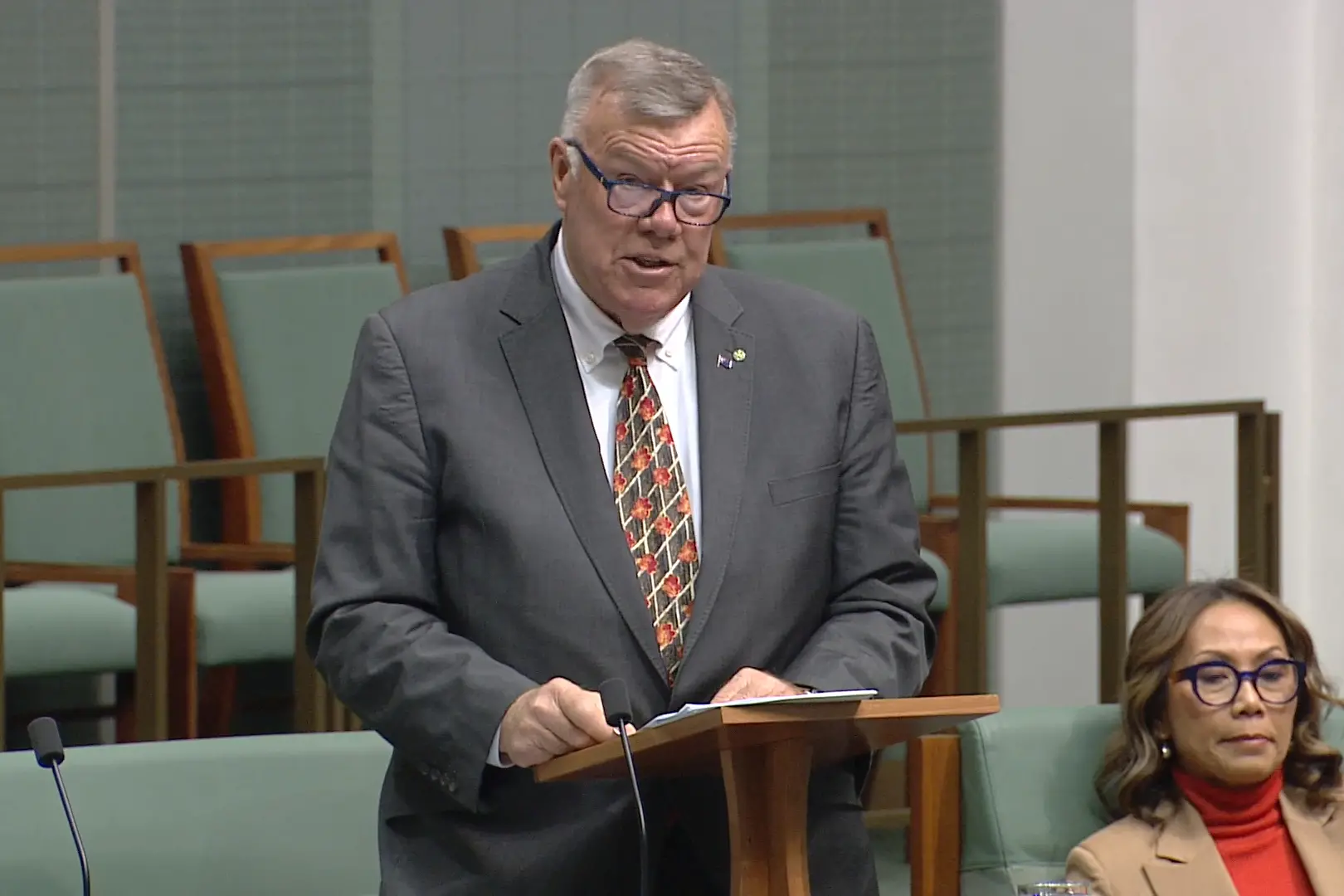
Federal Member for Farrer David Farley’ electorate spans 126,000 square kilometres and is home to 160,000 citizens across 14 shires and more than 200 suburbs, towns, and rural localities.
“We are the people who grow the food, mine the minerals, and move the freight that underwrites the national economy.
The numbers are blunt.
• Median personal income is $810 nett per week.
• House prices sit between $250,000 and $600,000.
“Meanwhile, shires are being forced to consider annual rate increases of 50 per cent to 85 per cent – not from bureaucratic excess, but because the cost of keeping roads open, towns functional, and halls standing has been inflated by forces originating not in our towns, but in this Parliament.
“A household earning $810 a week nett cannot absorb an 85 per cent rates hike. It is mathematically impossible.
“Yet the alternative – letting community assets rot – is a false choice we should never have been handed. Inflation is a tax without legislation.”
Mr Farley said most of our inflationary pressure was manufactured from within this parliament: electricity and Clean Energy policy costs passed straight to ratepayers; wage inflation disconnected from regional productivity; insurance premiums driven by modelling councils cannot influence; liquid energy and bitumen inflation crushing maintenance budgets; and repair costs rising faster than any grant index.
“Then there is the structural wound: the 2007 Water Act and its offspring, the Murray Darling Basin Plan, have contracted regional commerce across our shires.
“Irrigation-dependent towns have watched water reallocated away from productive agriculture – leaving fewer jobs, shrinking ratepayer bases, and hollowed-out main streets.
“The Basin Plan has exported the cost of its design onto the shoulders of regional councils.
“The Financial Assistance Grant (FAG) delivers over $3.6 billion nationally for 2026-27. But it is running in reverse to inflation – its formulas and algorithms were built for a different Australia and do not reflect the true cost environment regional councils now face.
“Every year, the real value of the grant declines while obligations grow.
“Our post-war memorial swimming pools are cracking.
“Town halls and community halls are decaying.
“Roads and bridges carry freight they were never engineered for.
“Replacing a regional pool costs millions; a shire with a shrinking grant and an exhausted ratepayer base cannot fund these renewals alone.
The FAG must be elevated to a minimum $6.6 billion – a mathematical floor, not a wish list - to cover:
• Replacement of end-of-life infrastructure – pools, halls, bridges
• Safe roads – the single largest unfunded liability facing regional councils
“We ask not for charity, but fairness: reform the FAG formulas, raise funding to $6.6 billion, offset legislated inflationary pressures councils cannot recoup, and account honestly for the Basin Plan’s economic cost.
“The people of Farrer did not create these problems but they are being asked to pay for them. This Parliament can fund the shires, or watch them fail.”