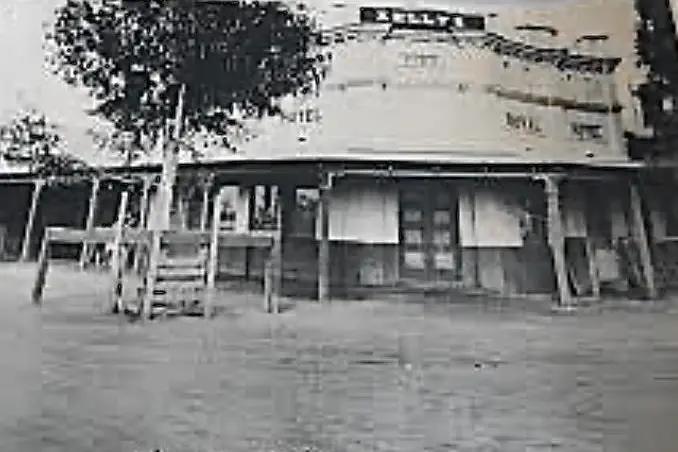
It was a quiet Friday afternoon in the NSW Riverina town of Grong Grong, population 287 recently when The Royal Hotel, or The Grongy as everyone calls it, wouldn’t normally be open for lunch on a Friday. But a group of old friends were staying in the nearby town of Narrandera for their 50-year school reunion so former publicans Brian Evans and Leanne Stockdale opened up shop. The Grongy, which first opened in 1875 to service passing stagecoaches, looks pretty different to the way the some people remember it back in the 1970s. Today the walls are lined with white wooden panelling to give it a Hamptons feel, and the designated ladies’ area, once with a sign that read The Sow Pen, is long gone. This rural pub brings people together, while trying to do a bit of good in their community. Every week its reported that some of the country’s most iconic pubs have been bought up by large pub groups, and absorbed into larger portfolios. Some of these groups are small or medium-sized, some are family-owned, operating pubs across multiple generations. Many of the larger groups power a good chunk of their operations from poker machines, sometimes grouped into specific venues where there’s demand. Gaming licence costs vary between states and locations but can be anywhere upwards of $100,000 per year. But this outlay can also bring in significant revenue. Many smaller operators like The Grongy say they would never want to install pokies for their own moral reasons (ordinary Australians lose billions to the machines every year). But pokies are one way that the big pub groups can financially dominate their gaming-free rivals. The big players also have a lot of muscle when it comes to their food and alcohol purchasing power, their ability to acquire and retain staff and streamlining their management and back-of-house systems. At The Grongy, a small number of people handle almost everything. They open the doors each day, man the bar and take deliveries. The familiar faces and community atmosphere is an important part of what regulars love about the place. Anecdotally, regular pub-goers report that their favourite venues lose their soul when big groups take over. Today, there are just under 7000 pubs, taverns and bars around the country, according to the latest ABS statistics, a fairly steep decline per capita since their heyday during the mid-19th century. Back then, towns such as the gold mining settlements of Ballarat and Bendigo might have 500 pubs across the district. Throughout their history, pubs have changed and adapted alongside society. There was the decline of the raucous six o’clock swill between the 1930s and 1960s – when working men would race to guzzle as much beer as they could before the mandated 6pm closing time. Then there was the original ban on women, who were excluded from most front bars until as late as the 1970s. In the 1990s, pure drinking dens expanded into fancy bistros which encouraged families. External entertainment, such as television and radio, also threatened the pub’s existence but the pub merely adapted once more: playing the horse races over the radio behind the bar, or introducing wide-screen TVs so punters could watch the footy. In The Australian Pub, historians Diane Kirkby, Tanja Luckins and Chris McConville recall that several pressures in the 20th century threatened the mere existence of old-school pubs. Faced with rising costs and a lack of parties willing or able to contribute to their upkeep, many old pubs met their fate at the end of a wrecker’s ball. But as quickly as the wrecking balls swung, a backlash also swung in defence of the plucky old-fashioned pub. Heritage groups and labour organisations banded together to save pubs that were destined to be turned into rubble. The Grongy itself was saved from disappearing in 2022 when the locals and passionate supporters from all over the world banded together to raise $1 million and bought it as a collective, a model that has worked across several regional pubs around the country