PHOTO
One Nation’s candidate for the federal seat of Farrer, David Farley, made a campaign stop in Hay recently, speaking to community members about his policy platform and taking the opportunity to address a claim that has circulated about his educational credentials since his preselection earlier this month.
Farley, 69, of Narrandera, won One Nation’s Farrer pre-selection on 7 March at the Albury Convention Centre, emerging from a field of three finalists drawn from more than 80 initial applicants.
His LinkedIn profile lists Harvard University under his education, which prompted reporting in some outlets suggesting Farley was claiming a Harvard degree.
Farley addressed the matter directly when it was raised by a Hay community member during his visit.
He told the group that Harvard University had approached his company, Colly Cotton, some years ago to develop a case study on its business model for use in the Harvard Agribusiness School’s teaching program. Following the completion of that case study, he was invited to present the course to the school, a request that was repeated on multiple occasions over several years.
Each engagement, he said, resulted in a certificate of achievement, not an academic qualification.
“If you went to Harvard today, you could still pull out the case study on Colly Cotton,” he said.
He described reporting that characterised his connection to Harvard as a degree claim as unfair and said the media had taken his professional engagement with the institution out of context.
Farley’s professional background is extensive.
He began his career as a jackaroo with FS Falkiner and Sons in Deniliquin in 1975, working his way through roles as overseer and irrigation development specialist before being appointed to lead the development of a major irrigation enterprise in northern NSW.
Over 19 years he built Colly Cotton from 400 acres to 68,000 acres, with two cotton gins and a global trading operation.
He later served as CEO of the Australian Agricultural Company, one of Australia’s largest cattle enterprises, managing roughly 29 million acres and up to 650,000 head of cattle across northern Australia.
Between those roles he managed a farmers’ cooperative in California, which required regular travel to Washington to negotiate on behalf of farmers on water and trade rights, and to Sacramento for state water matters.
He currently chairs the water advocacy group Speak Up 4 Water and operates Matrix Commodities, an agricultural commodity trading and investment company in Narrandera.
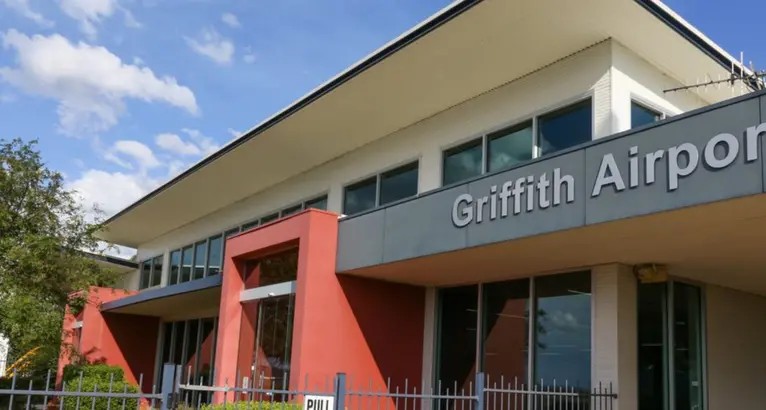
He told community members in Hay that he was born in Narrandera, the grandson of a First World War Light Horseman who settled in Griffith and the son of a Second World War naval veteran who established an agricultural service business in Narrandera.
Those family roots, he said, informed his decision to enter politics at 69.
“A lot of people ask me, why are you doing this at your age?” he said. “That’s pretty simple”.
He described watching the communities he worked in diminish over decades
Farley said he had felt for some time that regional voices were being ignored, both by government bureaucrats and by successive elected representatives.
He said he had previously been a member of the Nationals but found his ideas on water policy were not taken seriously within the Coalition. He joined One Nation because addressing water and energy policy in Canberra required a party with the courage and tenacity to fight for it and One Nation had that.
“I’ve got very familiar with water,” he said of his decades across the irrigation sector.
“The Murray-Darling Basin Plan is setting out our food policy, our food import policy, our regional resilience policy. It’s actually interfering with our defence policy.”
His central water policy position is that water should be treated as a sovereign asset belonging to all Australians, rather than an environmental asset.
He said that framing had led to the over-allocation of water to environmental holdings at the expense of towns, cities and productive capacity.
He described the Murray-Darling Basin Plan as having caused direct economic harm to the communities he had worked in and lived near, stripping towns of population and industry through the progressive buyback of water licences. He told community members who had sold their licences to the government that they may not have fully accounted for the downstream value of that water to local businesses. “You didn’t account for the intrinsic value in the towns that that water’s worth,” he said.
“You’re selling out the community at the same time.”
If elected, Farley said he intended to move three bills in Parliament during the May sitting.
The first would withdraw Australia from international water treaties he argued were constraining national water management, citing the Ramsar Convention specifically.
The second would call for a Royal Commission into water, with terms of reference focused not just on the Murray-Darling Basin Plan but on regional resilience more broadly.
The third would require that at least half of the water currently held by the Commonwealth Environmental Water Holder be returned to the consumptive pool.
He noted that the Murrumbidgee Valley and the Murray Valley were currently facing zero allocation for next year, making speed critical.
He acknowledged the legislative path would not be straightforward, with the Labor government controlling the lower house. His argument to that government was framed around risk.
“Are you prepared to leave food policy in a dangerous position next year?” he said. “Are you prepared to take the risk of taking our food imports from $20 billion to probably up to $40 billion?”
He said One Nation’s senate representation, including four or five senators, gave him confidence the bills could pass the upper house.
On energy, Farley said Australia was the only country among 129 signatories to a 1979 international agreement that had failed to maintain a 90-day fuel reserve. He advocated for the construction of large fuel storage facilities in agricultural and mining regions, delivered via the inland rail network and spur lines. He suggested Hay as a potential site for a major fuel depot.
On immigration, Farley said Australia should step back from its obligations under the United Nations High Commissioner for Refugees protocols and develop a national immigration policy based on skills, age and a willingness to assimilate.
He compared the model to selecting a football team.
He said the question should always be what Australia needed, not what international frameworks required.
Farley also argued for One Nation’s value as a crossbench force rather than a party of government, pointing to the party’s role in securing Royal Commissions into banking and insurance and into family law.
He said One Nation could use its senate position to extract concessions on regional services, including hospitals, aged care, childcare and education, as the price of its vote on legislation. “You’ve got to hold the cards,” he said.
On the question of the by-election contest, Farley said One Nation was polling ahead of the field based on early surveys, with postal and pre-poll votes accounting for around 24 per cent of the Farrer vote before polling day.
The Farrer by-election will be held on 9 May. The seat was held by former Liberal leader Sussan Ley for 25 years before her resignation from parliament in February following her defeat in a Liberal Party leadership ballot by Angus Taylor.