PHOTO
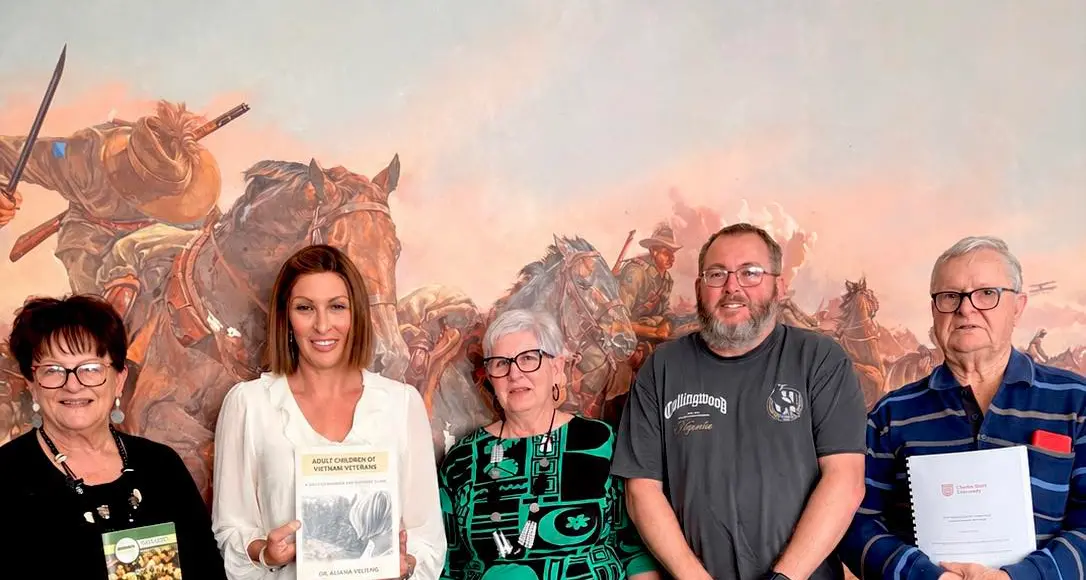
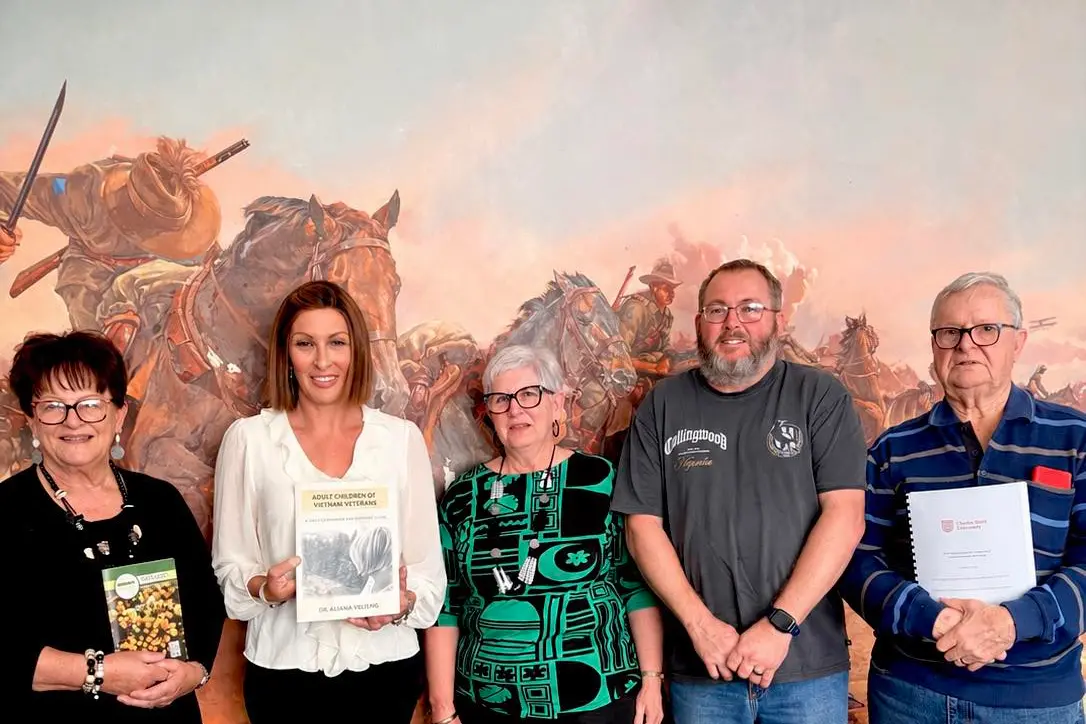
Vietnam veteran’s daughter Alarna Vrieling of Narrandera has completed a thesis exploring whether having an Australian Vietnam veteran father impacts health and wellbeing in adulthood, and if so, in what way/s.
She says the voices of adult children of Vietnam veterans have been largely neglected in the existing research.
“With the adult children reaching middle-age, it is considered timely to explore the intergenerational effects of the war, especially with an insider-researcher who is a child of a Vietnam veteran.”
The study was developed within a critical social work conceptual framework, which enabled social structures and power to be considered while prioritising the voices of the adult children.
A mixed-method approach was adopted which was able to deal with the large volume of information while still honouring the qualitative intent of the study.
Participants could choose to participate via a written response, virtual or a face-to-face interview. Qualitative data was thematically analysed, while software programs such as SPSS® and Netica® were used to analyse the quantitative data.
To be eligible, participants needed to have lived most of their childhood in the same home as the Vietnam veteran, who had to be listed on the publicly available Australian nominal roll.
Of the 259 expressions of interest, the final number of participants who met the eligibility criteria was 94. Participants ranged from 35-65 years old; 80.9% were female and 19.1% were male.
Findings revealed that Vietnam veterans’ families experienced poorer overall health and wellbeing outcomes than the Australian population.
Participants experienced a variety of physical health problems, such as skin conditions, musculoskeletal problems, fertility and/or reproductive issues and incidences of congenital anomalies, however a dominant theme was rare and difficult to diagnose illnesses.
The health of participants’ siblings and the veterans’ grandchildren was also reported relative to their fathers’ possible exposure to chemicals, particularly dioxin (Agent Orange), while deployed to Vietnam, indicating a possible epigenetic effect.
A clear statistical relationship was found between the health of Vietnam veterans and their children.
Participants reported significant issues with depression and/or anxiety and substance misuse, as well as problems forming and sustaining interpersonal relationships.
Half of the participants were proud of their fathers’ war service, while the other half were proud but then shared the significant impact it has had on their lives.
Participants spoke of a childhood ‘walking on eggshells’ and being subjected to their parents’ high expectations, harsh, authoritative parenting styles and emotional unavailability.
Participants made specific recommendations to help prevent the levels of trauma experienced by these families, while mitigating the destructive effects of war on returning defence personnel and veterans.
These recommendations offer strategies for improved service provision that could inform the action plans coming from the Royal Commission into Defence and Veteran Suicide, 2024.
This includes proactive strategies to encourage defence culture and organisational structure to prioritise veterans’ families’ wellbeing.