PHOTO
Regional high school students have been given a hands-on look at the future of engineering, with a long-running Riverina program continuing to be a potential pathway to careers in the field.
The Riverina Eastern Regional Organisation of Councils, in partnership with regional career development organisation COMPACT Inc, hosted its Build a Bridge...& get over it program last week.
For almost two decades, both groups have been shaping the future of regional engineering, opening doors for young people to explore civil engineering careers through immersive, hands on learning.
The three-day engineering camp took place last week at the Borambola Sport and Recreation Centre, giving students a rare chance to experience what a career in civil engineering looks like in practice.
Since it was established 18 years ago, the camp, which is supported by Evolution Mining – Cowal, IPWEA (NSW & ACT), Southwest Group, Goldenfields Water and Riverina Water, has become a cornerstone of regional workforce development, influencing almost 400 students since its inception.
Many past participants credit the experience as a key factor in pursuing further study and careers in engineering.
This year, 24 students from years 10 to 12 were selected through a competitive application process, representing council areas including Bland, Coolamon, Cootamundra-Gundagai, Greater Hume, Junee, Lockhart and Temora, along with the Goldenfields Water and Riverina Water regions.
Over three days, students participated in a practical learning environment.
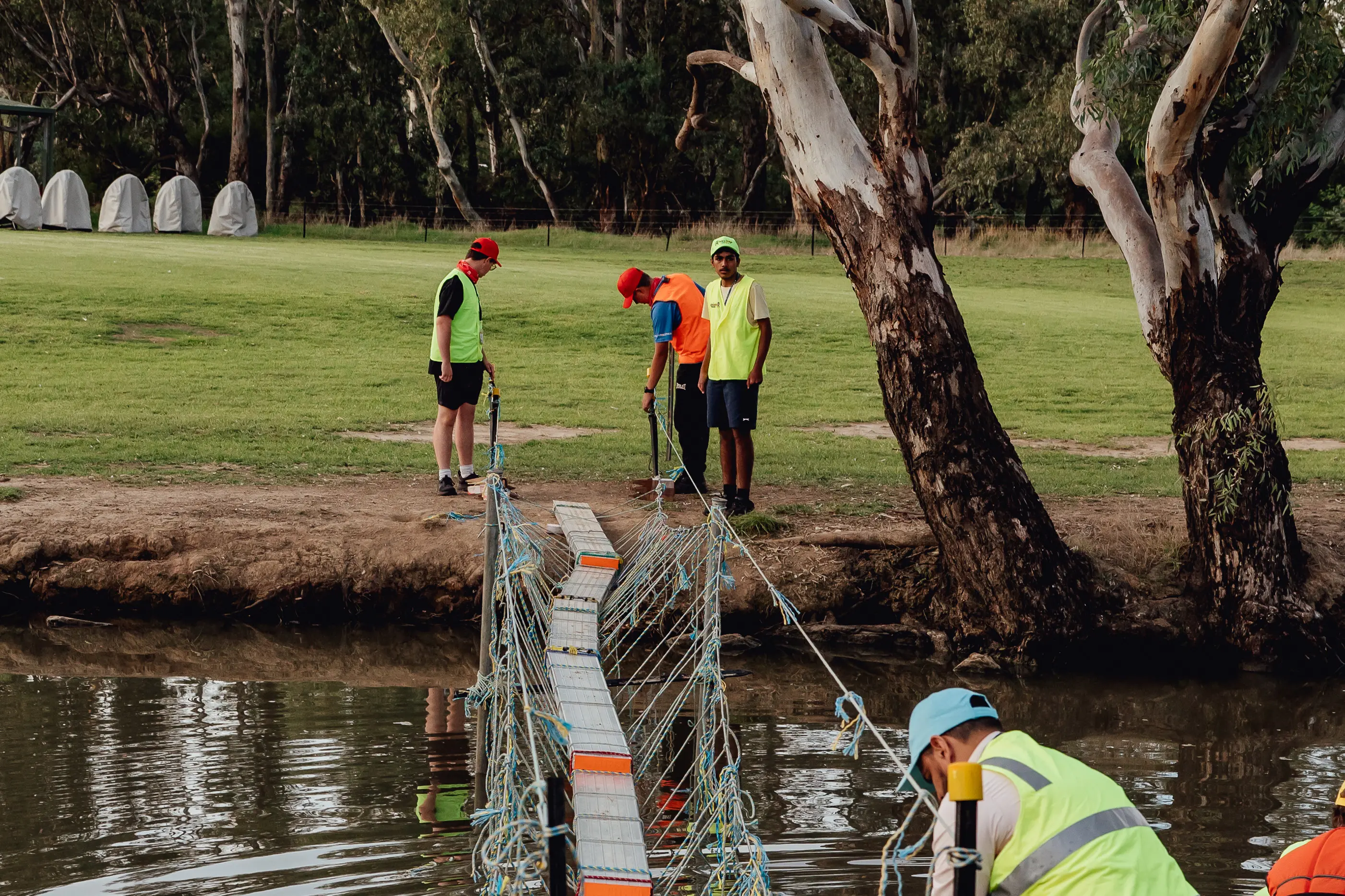
Working in teams, they tackled problem-solving, applied engineering theory and gained first-hand insight into industry practices to construct a fully functional bridge in an intensive, real world learning experience, where teamwork and engineering theory were brought to life.
REROC chief executive officer Megan Mulrooney said the program’s longevity highlighted the power of partnership between education, industry and local government.
“The Build a Bridge…& get over it engineering camp continues to thrive because of the commitment of our industry partners and practising engineers, who generously give their time to mentor students," Ms Mulrooney said.
“The camp provides young people with genuine insight into engineering careers and supports informed decisions about their future.”
Lockhart Shire Council director of engineering Dr Austin Morris led this year’s camp in his first year as program lead, supported by a team of engineers, surveyors and environmental scientists who mentor students, deliver skill based sessions and share their own career pathways, guiding students through each stage of the project.
Day one of the camp introduced students to foundational engineering skills, including laser levelling, feature surveying, spatial coordinates, basic soil testing and field measurements, guided by experienced REROC engineer mentors.
On the second day, teams were challenged to design a bridge spanning an 11-metre-wide creek within the centre’s grounds, presenting concepts to a panel of engineers and peers for assessment using a structured selection criteria matrix.
The final day saw the winning design being built, with the successful team acting as project managers and the other teams forming a construction crew under professional supervision.
The camp came to a climax with the official unveiling of the completed bridge and students “graduating” by walking over the bridge they had built to receive certificates.
REROC chairman Mayor Rick Firman, acting chair for Riverina Water Cr Gail Driscoll, REROC board member Mayor Peter Sharp and acting COMPACT CEO Courtney Johnson presented students with their certificates when they had graduated.
COMPACT acting executive officer Courtney Johnson said the camp played a critical role in providing young people with “genuine insight into engineering careers and supporting informed decisions about their future”.
“It shows students they don’t need to leave regional areas to build fulfilling and impactful careers,” she said.
Mrs Mulrooney said the camp was essential to building the skilled engineering workforce needed to support communities now and into the future.
“Civil engineers are in high demand not only across NSW, but nationally and globally, driven by sustained regional development, major infrastructure investment, population growth, climate resilience planning and the renewal of ageing assets,” she said.