PHOTO
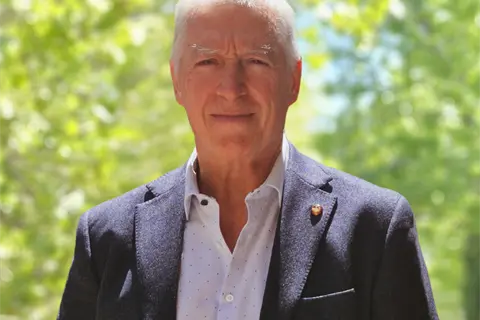
Narrandera Shire councillor Cameron Lander represented council at this year’s Murray Darling Association’s 82nd National Conference.
The Murray Darling Association (MDA) is the peak body representing local government across the Murray Darling Basin, with the membership base divided into 12 separate regions in which councils have common interests.
The national conference and annual general meeting were held in Shepparton from 24-27 August.
The conference featured keynote speakers and panel sessions including industry heads, state and federal government representatives, as well as scientists and educators presenting on issues that affect the MDB water resources and communities.
Michael McCormack MP, Federal Member for Riverina and Shadow Minister for Water also spoke at the conference.
Major topics discussed were:
• sustainable diversion limit adjustment mechanism (SDLAM) reconciliation, shortfalls, adjustment and constraints
• water security for everyone
• carp, native fish and water quality
• basin community security and industry socio-economics; and
• future priorities and innovation.
Motions debated and passed at the AGM will set the agenda of the MDA for the coming year(s).
Main issues/concerns of the issues discussed that are of particular interest to council included:
• Regional and rural communities and industries confidence in the supply of water continues to decline. Confidence is being eroded given the constant stress from water buy backs and similar strategies pursued by the commonwealth with little focus on water security especially through improved supply management. It was also noted that the economic and social impacts of water buybacks was an omission in the application of the Water Act 2007 and the MDB Plan Review.
• The likelihood that the reconciliation of the SDLAM measures and continued focus outside of water and food security would result in the commonwealth applying further reductions to the consumptive pool. This would further reduce availability for industry, especially primary production, and not accommodate the expansion of data centres which on average require around two hectares for a site including battery storage, 10 hectares in a solar array or equivalent renewable energy source, and 400m litres of water per annum (current design parameters).
• Concerns over the Commonwealth Environment Water Holder’s (CEWH) management of its $11b water rights. It was a commonly held view that the CEWH had failed to effectively manage environmental flows to the extent that they were not realising desired environmental outcomes across the basin and were paying above market price for entitlements, especially from primary producers who were in no financial position to refuse such offers, thereby artificially inflating the market.
• These factors plus others such as increasing power, fuel, labour and fertilizer costs is resulting in Australia becoming uncompetitive in food and produce markets. The local cannery that supplies tomatoes to the Australian market for example is now operating at about 50 percent due to the lack in demand while the import of overseas canned tomatoes is increasing despite recent studies showing levels of chemicals in some products outside Australian standards. If the decline in Australian production continues at the current rate, research indicates that Australia will become a net food importer within 5-11 years as imports outpace exports.
• Water quality remains a concern both in terms of town and agricultural supply. Options to improve quality such as improved catchment and flow control, the removal of carp and improvements in native fish, wetland and flood management were discussed. It was noted that the release of the carp virus remained a couple of years off while the efficacy and possibly of transfer to other species are fully determined. Harvesting and processing of carp into products such as fertilizer was discussed as an option for the short-term while this is occurring. A question was asked of Michael McCormack MP on the commonwealth’s use of its external powers under the constitution to carry legislation such as the Water Act 2007. This effectively enables the commonwealth to implement principles contained in external treaties and agreements on the Australian community that arguably would not necessarily be possible under the constitution. Mr McCormack did not see any concerns with this. The MDA will issue a communique on the outcomes of the AGM including motions passed and draft position statements.