PHOTO
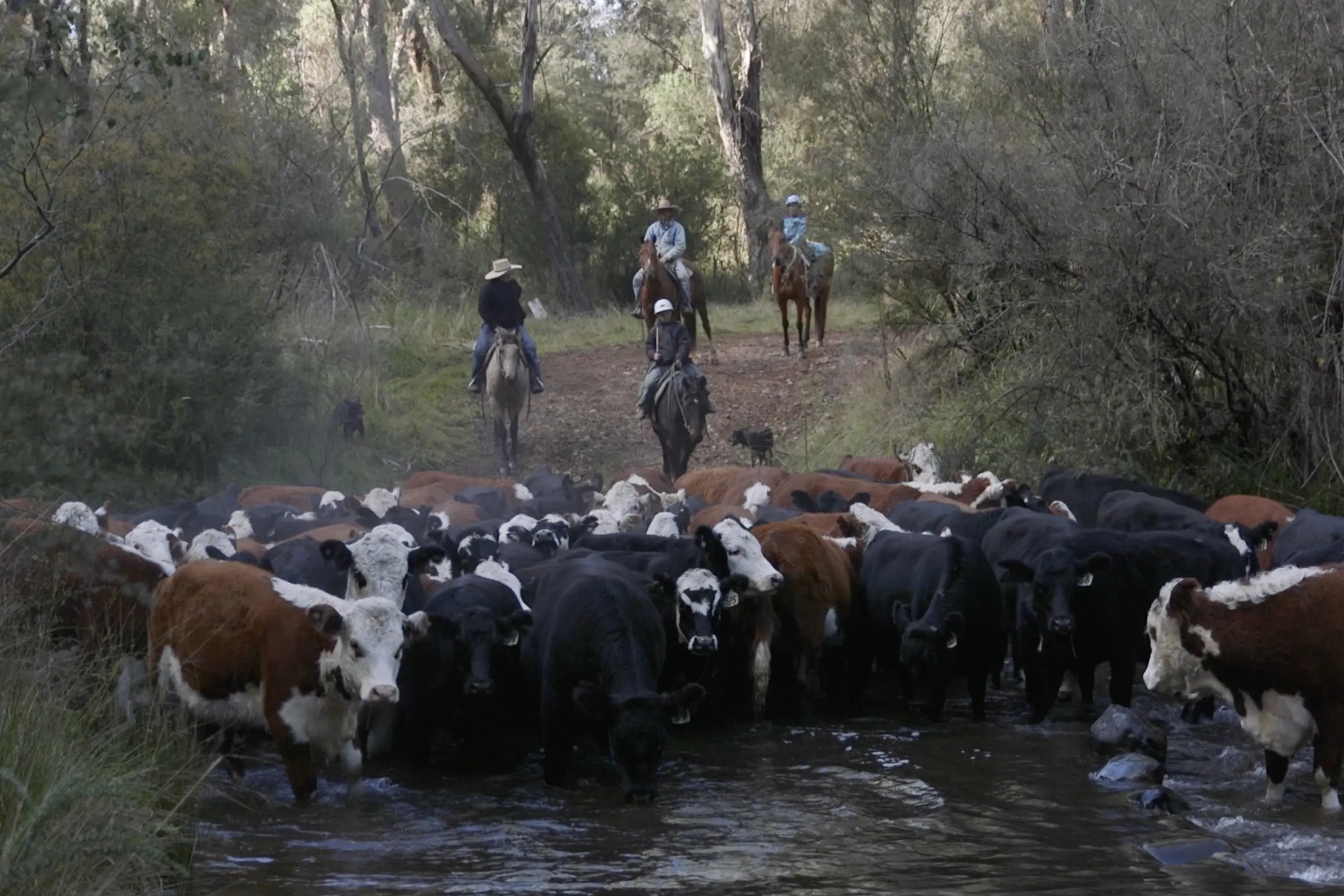
The Lindleys are among a handful of Australian families still droving their cattle to the high plains of the NSW Snowy Mountains each December to fatten on the sweet native herbage over summer.
Their heritage and annual pilgrimage from their home in Gundagai with cattle is now the subject of a documentary, Lindley’s Last Ride, set to be screened at the historic Leeton Roxy theatre on Thursday, July 23 at 2pm.
Produced by Ross Harmer of West Wyalong Movies, Lindley’s Last Ride will be screened in collaboration with Can Assist Leeton to raise funds for regional cancer patients. Can Assist raises funds to provide financial assistance to people in the local community undergoing cancer treatment.
Kosciusko State Park was declared a national park in 1967 with grazing banned in 1969 and the last snow leases terminated three years later, bringing to an end 135 years of seasonal grazing in the Snowy Mountains.
The Lindleys retain one of the few freehold grazing properties within the park’s boundaries.
Their freehold is located along what was once a main route for stockmen and prospectors from the NSW South West Slopes and Riverina to access the grazing areas of the Long, Coolaman and Currango Plains or the Kiandra gold fields.
Brothers John and Bob Lindley have been taking cattle annually to the family’s high country freehold for decades.
Lindley’s Last Ride was written by Riverina journalist Kim Woods, of Leeton, and filmed and edited by Steve Moore, Mayfly Media, Wagga Wagga, with additional footage by James O’Connor, narration by Lyndsey Douglas and poem narration by Grant Luhrs.
Historical footage was supplied by the National Film and Sound Archive, Cinesound Movietone Newsreels, family of the late Bill Ridley, John Hart, Beth Barass, and RVN 2/Prime 7.
Interviewed on screen were John, Gordon, Peter and Bob Lindley, and Graham Elphick while the documentary was filmed on location in the Goobarragandra Wilderness Area.
The documentary traces the family’s story from the drought year of 1850.
Thomas Lindley, a convict transported to NSW in 1832, had prospered since finishing his sentence and had settled his young family at Gundagai to run the Rose Inn.
The season turned and rain began to fall, replenishing pasture on the surrounding squatters runs.
But a raging wall of floodwater swept down the Murrumbidgee River in the winter of 1852, drowning Thomas’s wife Hannah and his four young children, workers and two travellers. A plaque erected by the Lindley family on the river flats marks the spot of the tragedy.
West Wyalong Movies was founded in 2008 by Ross, a farmer, with the principal aim of capturing and sharing local history from Australian country towns.
The first documentary was West Wyalong Movies 1 released that year and exploring the history of this southwest NSW town with chapters on wheat growing, eucalyptus oil distilling and the annual show.
Ross followed up with the second part to this DVD in 2010, exploring the region’s wild past, firstly in beef then gold followed by wheat and sheep.
“Whilst the focus was primarily on the southwest, the stories being shared were easily related to anywhere across the Australian wheat belt,” he said.
Over the years he has undertaken commissions for various communities to make a permanent record of their history on film, including Ariah Park, Temora, Quandialla, West Wyalong, Tallimba, Condobolin and Ungarie.
West Wyalong Movies have produced a collection of 34 documentaries on DVD to date and have several in production for 2025.
The documentaries have explored early automobiles, farm machinery, tractors, headers, trucks, trains, and aeroplanes.
Through the sale of DVDs, West Wyalong Movies has supported the Griffith Show Society, Ungarie Show Society, West Wyalong Historical Society, the West Wyalong Family History Group, Temora Education Fund and Country Hope Cutters Red Dirt Run.
“It’s important to embrace our heritage and preserve the great living history archive by sharing these uniquely Australian stories of how we conquered our environment in rural areas,” Ross said.