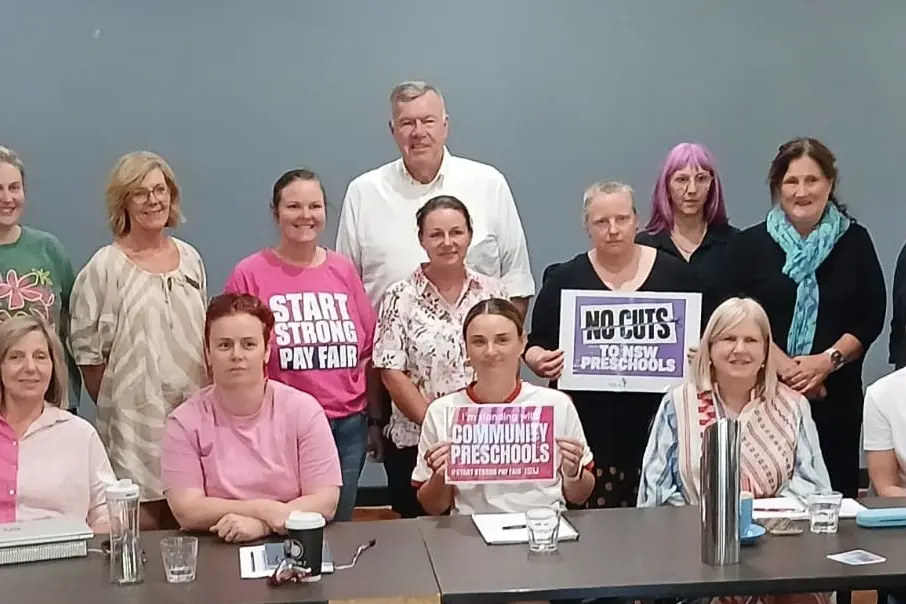
Federal Member for Farrer David Farley is on the attack, accusing the NSW government of putting workforce participation, productivity and economic growth in his electorate at risk via bad policy around pre-schools. While the NSW government has announced funding extensions for community preschools through to 2028, Mr Farley says the state government’s disastrous Universal Pre-school Modelling fails to address other pressures confronting services. Mr Farley says the consequences of the policy extend into areas of federal concern. “Labor has again shown how out of touch it is with people,” Mr Farley said. “One of the most absurd elements of this model is that providers have been given no time to prepare or fully articulate just how badly affected they will be as this comes into effect in January 2027. “The government has not properly consulted with services.” Specifically, Mr Farley is concerned about the ramifications for communities in the Farrer electorate as a result of the policy. "If community pre-schools are forced to cut services or close programs, parents will be pushed out of the workforce and regional businesses will lose workers they simply cannot afford to lose,” Mr Farley said. "That means fewer people working in our hospitals, schools, farms, aged care facilities and small businesses, and therefore lower productivity, putting greater pressures on regional economies.” The issue comes on top of The Inquiry into the State of Australia's Early Childhood Education and Care (ECEC) System in Rural, Regional and Remote Communities. Mr Farley has written to the Minister for Early Childhood Education of Australia Senator Jess Walsh requesting that key demands raised by the Australian Childhood Alliance (ACA) to the inquiry be addressed. Key issues remaining with the model include: • Child safety risks • Community pre-schools warn staffing arrangements could leave fewer educators supervising children. • Support for equity children under threat • Reduced capacity to provide specialist support could make it harder for children with additional needs to fully participate in pre-school programs. • Workforce shortages could worsen: The sector is already struggling to attract and retain qualified educators and teachers, and further pressure would lead to staff departures, reduced service capacity, and growing waiting lists for families. • Regional communities hit hardest: Many community pre-schools are the only dedicated early childhood service in smaller towns and if services are forced to reduce operations or close, families will be forced to travel long distances or miss out altogether. • Fee caps squeezing services Community pre-schools are being prevented from setting fees that reflect the real cost of providing safe, high-quality education. Community preschools are being denied the flexibility to adjust fees to remain financially viable which leaves many not-for-profit services facing impossible choices between cutting programs, reducing staff, or turning families away. Some community preschools are also operating at capacity and cannot simply enrol more children. "Community preschools are not an optional extra. They are critical economic infrastructure," Mr Farley said. Following consultations with preschool directors across Farrer, including Albury Pre-school Director Jo Barton and some 20 other directors from across the electorate, Mr Farley is backing calls for NSW Education Minister Prue Car to: • Fully fund a 15 per cent wage increase awarded by the Fair Work Commission; • Fully fund support for children with additional needs; • Delay implementation of the new policy model to beyond 1 January 2027, and commission an independent review; • Consult with pre-school communities directly.