PHOTO
A courageous mother of four from the Murrumbidgee Irrigation Area stepped up to fight for Australian fruit growers in their hour of need.
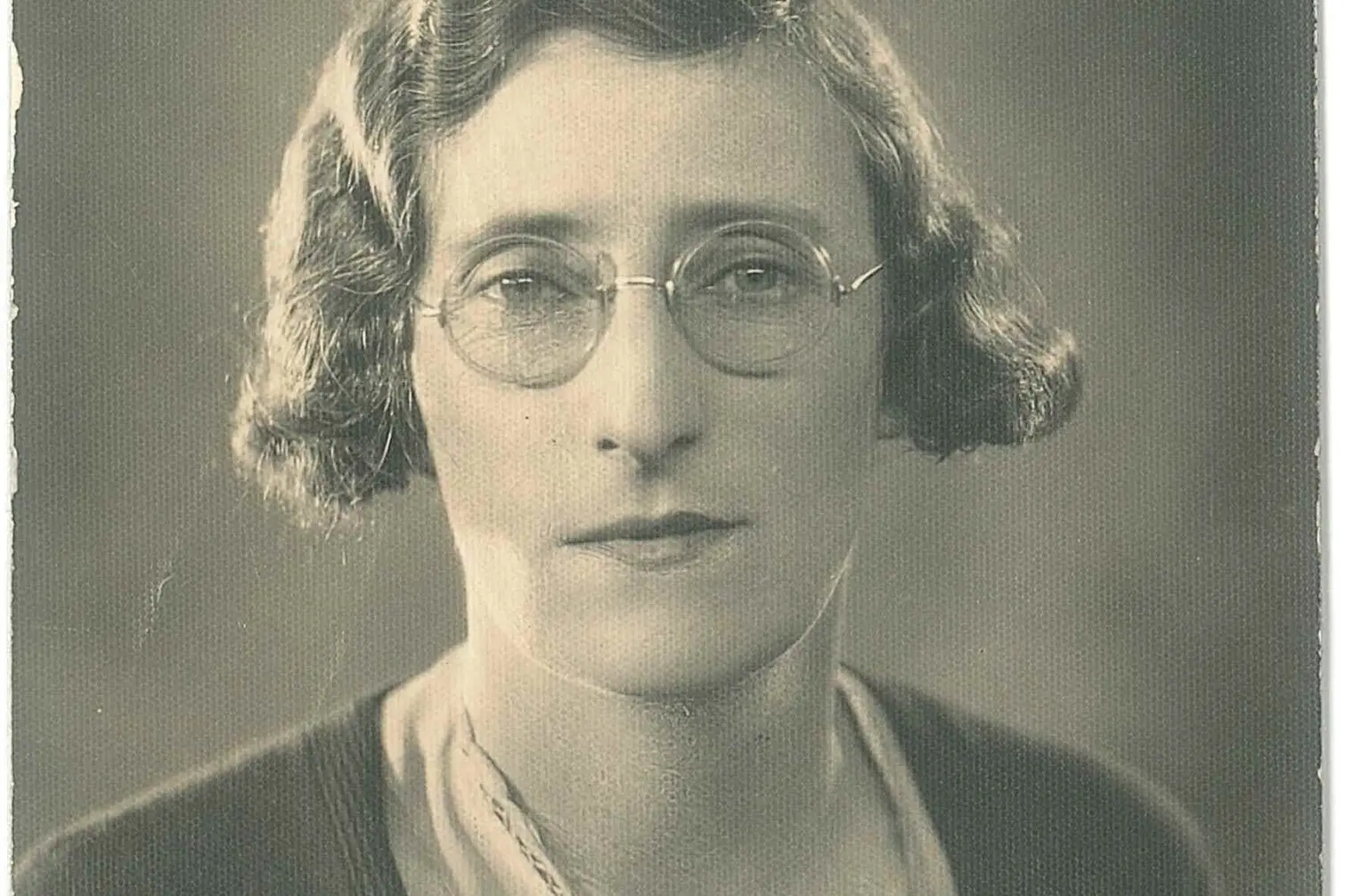
Gwen Green might have been five-foot nothing and an inexperienced public speaker, but in 1934 she was credited with saving the country’s extensive fruit industry.
With falling sales of canned and dried fruits the industry was in crisis. One cannery in Gwen’s hometown of Leeton was sitting on an estimated 4.5 million tins that it could not sell. International markets had collapsed and Australians were buying around half the quantity they had a few years earlier, most likely because of the Great Depression. In early 1934, the cannery announced it would not be able to accept the next season’s crop.
Gwen recalled the district going into “mourning”, with the economic fallout set to hit the entire community, including the general store she operated with her husband Judah. In her mid-thirties, she had recently been elected president of the town’s CWA branch, so she decided to call on them to take action: “Look girls, if the men can’t help themselves, what say we try and do it?”
Many of the women lived on fruit blocks, and juggled running households with working alongside their husbands in the orchards to keep wage costs down, so they readily agreed to Gwen’s seemingly simple plan.
At a women’s rally in March, she explained her intention to appeal directly to Australian housewives and CWA members across the state. All they had to do was buy two extra cans of fruit a month, or two more pounds of dried fruit, to help clear the surplus.
With the wider community behind her, Gwen set off for the Country Women’s Association (CWA) of NSW annual State Conference in Sydney, where she easily convinced delegates to back the campaign.
Leaving the conference, Gwen began walking towards Castlereagh Street, where her father worked. “I passed the Sydney Morning Herald building, and I thought, that’s what I’ve got to do. I’ve got to get the newspapers to do what I wouldn’t have voice enough to do.
“And I went in and I said, ‘Can I speak with to the editor?’, and of course the girl on the counter laughed at me,” Gwen explained in an oral history interview with Brenda Factor, which forms part of the National Library of Australia collection.
Back out in the street, Gwen noticed a staircase leading to the building’s upper floors. Refusing to give up, she took the stairs to the editorial floor and button-holed the editor in his office. The paper ended up running four full pages on Gwen and her courageous campaign over the next few months.
Noting her tiny stature and inexperience, offset by a burning enthusiasm, the women’s editor described her as “a shining example of what a lay person, unskilled in the ways of politicians and public platforms, can do when she has a mission before her and a stout heart to bring to the job”.
Within weeks of the conference, the campaign had both government and industry support. Two members of the CWA State Executive joined a special committee that included representatives from every sector of the fruit industry.
Gwen was appointed Honorary Organiser by the Australian Fruitgrowers’ Federation and given money to cover expenses. She used some of it to post letters to every women’s organisation in Australia, and generated interest by speaking at meetings and on the radio.
Consumers snapped up six million extra cans of fruit within months, not only securing the immediate future of the Leeton cannery, but also putting the entire Australian industry on a firmer footing. The campaign was so successful that supplies ran out and it had to be suspended.
Gwen celebrated by enjoying a well-earned summer holiday on the beach at Bondi with her children. But she was back the following season, once again urging Australians to support the industry and promoting a small recipe book that she had compiled.
Prime Minister Joseph Lyons wrote the foreword and the federal government distributed 250,000 copies free of charge.
In 1936, Gwen was elected foundation president of the CWA of NSW - Murrumbidgee Lachlan Group and the following year she was awarded the King George VI Coronation Medal for her efforts.
Around this time she and Judah moved to Goulburn and became wool producers on a small scale. Gwen remained actively involved in the CWA until Judah died in 1960 and she retired to Sydney.
Always community-minded, she volunteered with Meals on Wheels until one of her daughters pointed out that she was older than many of the people she visited. Gwen died in 1987 at the age of 87.
* Edited extract from The Women Who Changed Country Australia, by Liz Harfull, published by Murdoch Books and available for purchase from the Country Women’s Association (CWA) of NSW.