PHOTO
David Farley won the seat of Farrer for One Nation with a landslide victory in the by-election but his win has Indigenous and migrant communities concerned about racism and division in the electorate.
However, Mr Farley says he has an “open-door policy” to discuss concerns with Farrer constituents.
Almost 40 per cent of Farrer’s voters backed One Nation in the recent by-election.
Mr Farley will enjoy a comfortable margin of more than 7 per cent when he takes his place as the party’s first elected member of the House of Representatives.
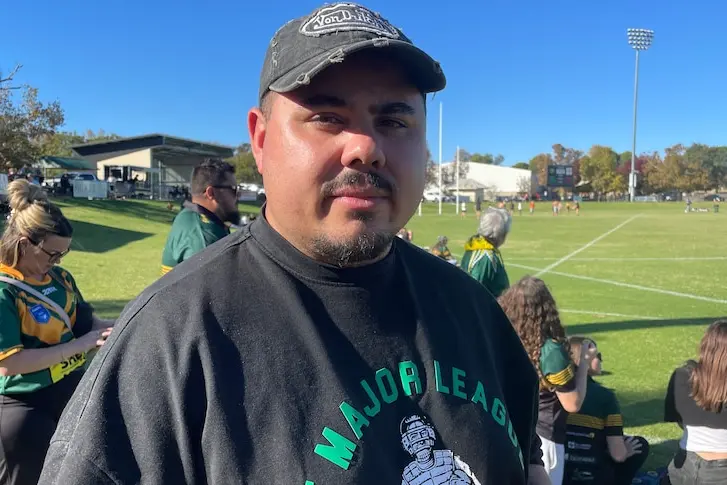
In Mr Farley’s hometown of Narrandera, Mr Lyons said he was “shattered and disappointed” by the election result.
“I think a lot of people are really disenfranchised with the major parties, especially the Liberals in this area, and that’s played out,” Mr Lyons said.
“In my community, Narrandera, being a high Aboriginal population we will be very worried and fearful about this result. It is concerning that will give oxygen to more people to support One Nation, [and to] openly support them.”
Mr Lyons, a Narrandera shire councillor who spoke to ABC Riverina in his personal capacity, supported independent Michelle Milthorpe in the by-election campaign, and said One Nation’s rhetoric had been divisive.
He said he hoped the new member for Farrer would engage with the local Indigenous community to understand its issues.
“I think it’s important, regardless of what party you sit in, that you do your best to include people and not continue to divide people up,” he said.
“Sit down with everyone, whether it’s migrants, Aboriginal people, doesn't matter who you are, you need to listen to everyone and make the effort.
“Because [the Liberals] haven’t, and that’s why they have been decimated as a party.”
Narinder Singh Sandu, from Griffith’s Sikh community, said he believed people voted for Mr Farley based on issues such as water management rather than the party’s position on immigration.
“People are saying they want [him] because of his knowledge regarding the water and are supporting him for that, but then at the same time, the same people need to look at who they rely on for workers,” he said.
Narinder Singh Sandu was surprised by the support for One Nation in Griffith. He said the conversation around immigration should not be a smokescreen to discriminate against minorities.
“Not pointing a finger at one nationality or anything like that … not just saying, ‘we can’t have this from this part of the world. We don’t want these people.’ And that’s what I get from Pauline Hanson,” he said.
Mr Farley said he had an “open door policy” for all his constituents, but when it came to immigration he wanted to see assimilation “at the forefront” for those seeking a life in Australia.
“We want to treat everyone equitably as Australians, to give everyone the opportunity … to make sure they’re contributing back to the nation of Australia,” he said.
“No matter what ethnicity, what skin colour, we want to treat everyone with equity.”
During the 2024-25 financial year, Australia’s net overseas migration numbers sat at 306,000, with NSW receiving the largest intake of 91,570, according to the Australian Bureau of Statistics.
In areas like Griffith, industries such as manufacturing, healthcare and agriculture make up the largest employers in the area.
Griffith Multicultural Council president Carmel La Rocca said those were key industries for migrant workers.
“The migrants in the Griffith area and regional areas, they’ve contributed enormously to the agricultural economy plus the manufacturing economy,” she said.
“They’re probably the bulk of the workers in these kinds of areas.”
Ms La Rocca said it was vital Mr Farley talked with the region’s multicultural communities because there was little engagement with them during the election campaign.
“I have not heard [of] anyone from the communities that have had a conversation with Mr Farley,” she said.
“Mr Farley is now an elected member, and it would be prudent for him to come out and understand what’s happened to the disengaged workers and where they are, how they’re treated.”
Mr Farley told the ABC he had engaged with a number of migrant and Indigenous communities, and said the under-servicing of immigration support in the area was something he would like to see fixed.
He said said PALM workers were “vital for commerce” in Farrer and it was important training and support for the scheme continued.