PHOTO
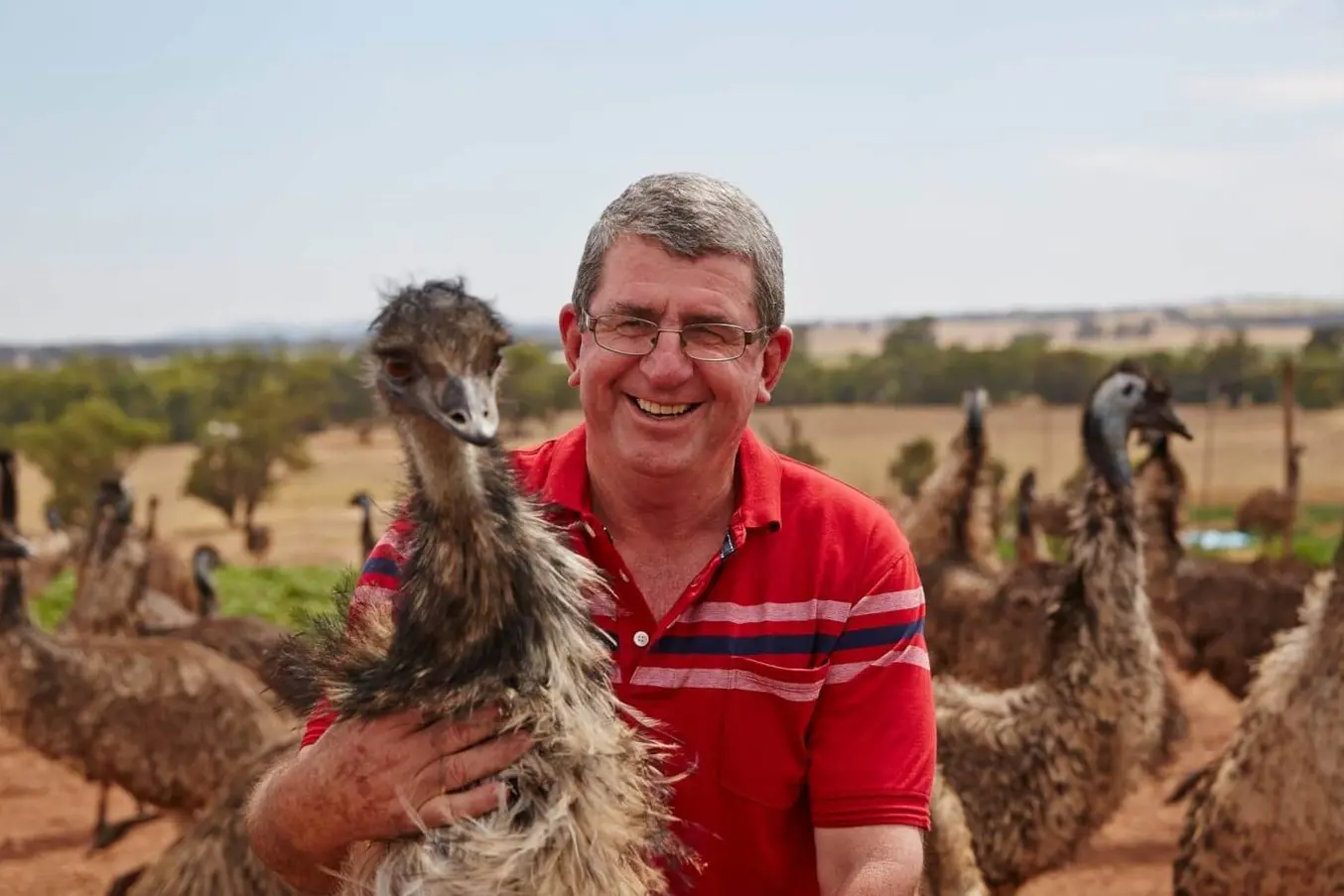
Ian Marston (pictured) was one of a small number of emu farmers who held on after the industry folded in the 1990s with the closure of the emu factory at Narrandera’s Red Hill Industrial Estate.
He is the owner of The Rock’s Marrocka Emu Farm where he and his wife have been farming emus for almost 30 years after buying a vacant block of land in 1991.
After leaving the Army, Ian was looking for something different and the emu trend was taking off in Asia and booming in Texas in the US.
Now he believes he is one of a small number of farmers who stuck with the industry and are beginning to reap the benefits of a growing demand.
Before the bottom fell out of the industry in the mid to late 90s, a collective of Riverina emu farmers banded together to build the abattoir at Narrandera to process the oil and meat from emu and ostrich, or ‘ratites’.
Ian said it ended up that they had heaps of product but no markets, so had all this fat and oil in storage.
While many quit the industry, Ian kept a small mob and generated some income from selling products and opening his farm to tour groups.
Over the decades the price slowly increased and in 2017 the industry saw a spike in interest after a US laboratory found that emu oil is the best source of the compound K2 MK4.
K2 is claimed to boost the immune system like nothing else in the world, he said.
A story on the ‘miracle compound’ on the ABC’s Landline led to the entire industry selling out in just a week.
At the same time, COVID hit and there was demand from the US and China and there was no product.
Ian and other farmers across Australia have steadily increased their mobs and he says the industry is in good shape with prices now up to around $150 per litre for emu oil.
He is also a fierce believer in the health benefits of the oil he takes every day and said that scientists were continuing to research K2 MK4 and indicate positive results.
“I really believe in the industry and I think it’s gonna go a long way, ” he said.
In the meantime, he is happy selling his oil wholesale and buying back the products to sell directly to the tours that he hopes to expand as the weather warms up.
His operation attracts about 50 people at a time and they can have morning tea with a talk on his large back deck with its view over the emu paddocks and across the valley to The Rock. They can also buy products and see the chicks.